
Why God Just Makes Sense
What’s Really On The Other Side?
What’s Really on the Other Side?
I’ve been close to death more than once, but one day stands out.
I was a skinny nineteen-year-old at the beach, and I decided to swim out to the fishnet buoy, about half a mile from shore. As kids, we’d swim out, hang onto the buoy to rest, then swim back. But two things were different that day. I wasn’t in shape for a swim that long, and the buoy no longer held me up out of the water. There was nowhere to rest.
As I started back to shore, about fifteen feet from the buoy, I panicked. In a split second, I was three feet underwater. As I stopped thrashing uncontrollably and regained my composure, something surprising happened. A feeling of tranquillity came over me, so peaceful that I almost gave in and took what would have been my last breath. Thankfully, I snapped out of it, swam to the surface, rolled onto my back, and slowly made my way to shore.
At the time, I wondered: what would have happened if I hadn’t snapped out of it? Would I have ceased to exist? Would I have gone to a better place? What would have transpired if that were my last breath?
Researchers say consciousness doesn’t simply end when the body stops. Decades of near-death studies have led them to that conclusion. What is this consciousness–our soul? If so, that raises a bigger question: where does it go?
Participants in near-death studies reported a range of experiences. Some describe a tunnel, a bright light, and overwhelming peace. Others describe darkness, fear, and isolation. The variation in these descriptions doesn’t help in discovering the answer to where our soul or consciousness would go.
Where does the answer lie, then?
Years after my brother died in a car accident, while I was searching for answers, the memory of the near-drowning came back to me vividly. One thing became absolutely clear: if you want answers about the afterlife, you have to go to God. Not just any god or man-made religion, but the God of the Bible.
I didn’t want someone’s opinion. I wanted the truth.
I asked a lot of people what happens after we die, and I got a wide range of answers. But when I asked, “How do you know for sure? What backs that up?” the reply was almost always “That’s just how I feel” or “I heard it somewhere.” If I pressed further, people often got angry.
I’ve noticed something since then: people who know what they believe and have a solid foundation for it don’t get angry when they’re challenged.
My foundation is the Bible. After more than forty years of studying it, my beliefs are more firmly grounded in God’s Word than they were when I started. That’s not because I’m trying to prove myself right. The more I study, the more solid it becomes, because it’s true. So when someone pushes hard against what I believe, I’m neither shaken nor angry. I simply try to share the truth of the Gospel.
Is Heaven real?
Canada’s first astronaut to command the International Space Station summered in the community just downriver from me. He spent nearly five months on the station. If I wanted to know what life up there is really like, I’d talk to him or read his book. He’s been there, so his account is firsthand and credible.
The same goes for the afterlife and Heaven. Jesus, God Himself, came from Heaven and returned there. He’s the only one who has actually been there and back, so His account is the only firsthand, credible one we have. That account is recorded in the Bible.
“No one has ever gone into heaven except the one who came from heaven—the Son of Man.” (John 3:13, NIV)
The Son of Man is Jesus. The one who came from Heaven says Heaven is real. In His own words about Lazarus and the rich man, He says Hell is real too. The rich man, in torment after death, begs:
“Then I beg you, father, send Lazarus to my family, for I have five brothers. Let him warn them, so that they will not also come to this place of torment.” (Luke 16:27-28, NIV)
And the answer he gets:
“If they do not listen to Moses and the Prophets, they will not be convinced even if someone rises from the dead.”(Luke 16:31, NIV)
So where does our soul go? Near-death experiences can’t tell us, but Jesus can. He’s clear that there are two destinations, not one. Heaven or Hell.
So how is it decided where we end up? Someone coming back from the dead to warn us won’t settle it. Jesus said so. And we can’t go by near-death experiences, because they differ so much.
The deciding factor: God’s grace
Why grace? Because a just and righteous God has to deal with our sin. Sin can’t enter Heaven, and the Bible is clear that every one of us is a sinner:
“For all have sinned and fall short of the glory of God.” (Romans 3:23, NIV)
That sin separates us from God, and the only way to close that gap was for God to send His Son to the cross in our place.
“For the wages of sin is death, but the gift of God is eternal life in Christ Jesus our Lord.” (Romans 6:23, NIV)
“For it is by grace you have been saved, through faith—and this is not from yourselves, it is the gift of God—not by works, so that no one can boast.” (Ephesians 2:8-9, NIV)
Grace is a gift that has to be received
Suppose I write you a cheque for a million dollars. You can show it to everyone and tell them you’re a millionaire. But until you sign it and cash it, you don’t have a cent. You have access to it, but not ownership.
And every cheque has an expiry date. If you don’t cash it in time, the gift is never yours.
Salvation works the same way. Many people believe they’re going to Heaven because they know about God, go to church, or try to be good. But they’ve never personally received the gift by faith. They have access, but not ownership. And the day they die, the offer expires. The door to Heaven is closed to them, not because God didn’t offer, but because they never accepted.
Jesus warned about this very thing:
“Not everyone who says to me, ‘Lord, Lord,’ will enter the kingdom of heaven… Then I will tell them plainly, ‘I never knew you. Away from me…’” (Matthew 7:21, 23, NIV)
Knowing about Him isn’t enough.
“You believe that there is one God. Good! Even the demons believe that—and shudder.” (James 2:19, NIV)
He knows you when you receive His gift by faith and openly acknowledge Him.
“Whoever acknowledges me before others, I will also acknowledge before my Father in heaven.” (Matthew 10:32, NIV)
“Yet to all who did receive him, to those who believed in his name, he gave the right to become children of God.” (John 1:12, NIV)
Those are God’s rules for getting into Heaven
I didn’t make the rules, but I do have to live by them, just as we all live by the rules of our society. You may not like God’s rules. You may want to get to Heaven your own way, like so many religions around the world try to do. You have the free will to do that. But here is what God says the outcome will be:
“There is a way that appears to be right, but in the end it leads to death.” (Proverbs 14:12, NIV)
Where you spend eternity is your choice. Don’t be deceived. Follow God’s plan of salvation.
For a plain, easy-to-understand guide to God’s plan of salvation, read A Mechanic’s Handbook To The God Of The Bible: Why God Just Makes Sense. If you’re ready now, go to ALL PAGES (top right) and click HOW TO FIND PEACE WITH GOD.
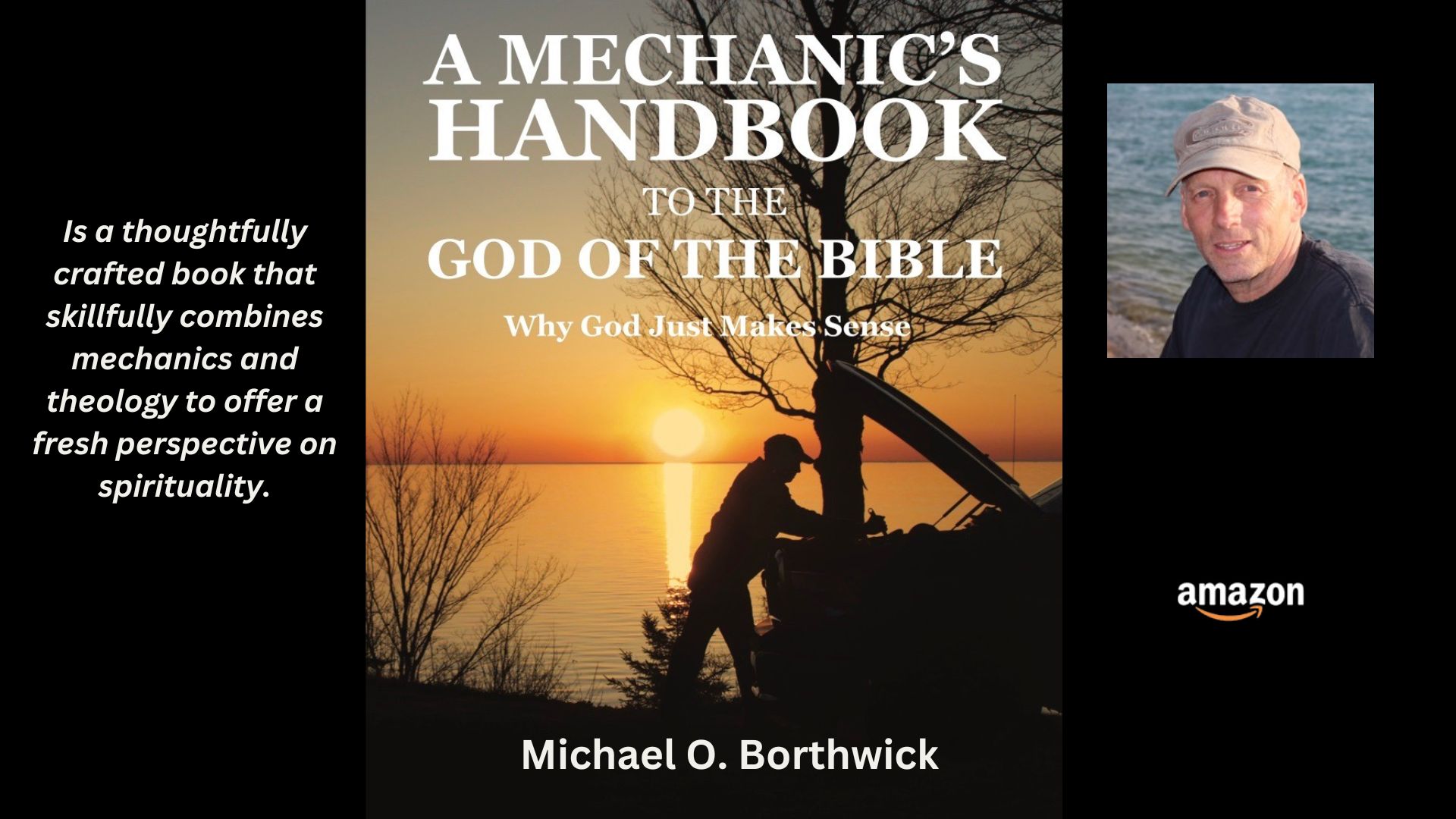
Get the book
A Mechanic's Handbook To The God Of The Bible
Have questions? Email thegodofthebiblehandbook@gmail.com.